Why Keyword Stuffing Still Matters in Modern SEO
If you started learning SEO in the early days, you probably heard this advice:
“Use your keyword as many times as possible.”
That advice is outdated—and dangerous today.
In modern SEO, keyword stuffing is one of the fastest ways to lose rankings, harm user experience, and trigger algorithmic penalties.
With Google’s advanced algorithms, NLP, Helpful Content System, and AI-powered ranking models, SEO today is about relevance, context, and intent—not repetition.
According to India’s Best AI SEO Consultants, websites drop from page 1 to page 10 simply because of poor keyword practices.
So, it is very important to know each and every micro detail about Keyword stufiing before you optimize your website for SEO.
Key Takeaways from this Guide:
- What keyword stuffing really is
- Why does it hurt rankings
- How to optimize keywords the right way
- Best practices aligned with AEO (Answer Engine Optimization) and LLM-based search
- Real-world examples
- Interview questions from fresher to 10+ years of experience
What Is Keyword Stuffing in SEO?
Keyword stuffing is the practice of overusing or unnaturally repeating keywords in web content in an attempt to manipulate search engine rankings.
in Simple terms,
Keyword stuffing is an outdated blackhat SEO technique where keywords are excessively repeated in content, meta tags, or links, reducing content quality and user experience.
Google explicitly classifies keyword stuffing as a spam tactic.
Let us try to understand keyword stuffing with a realtime example, 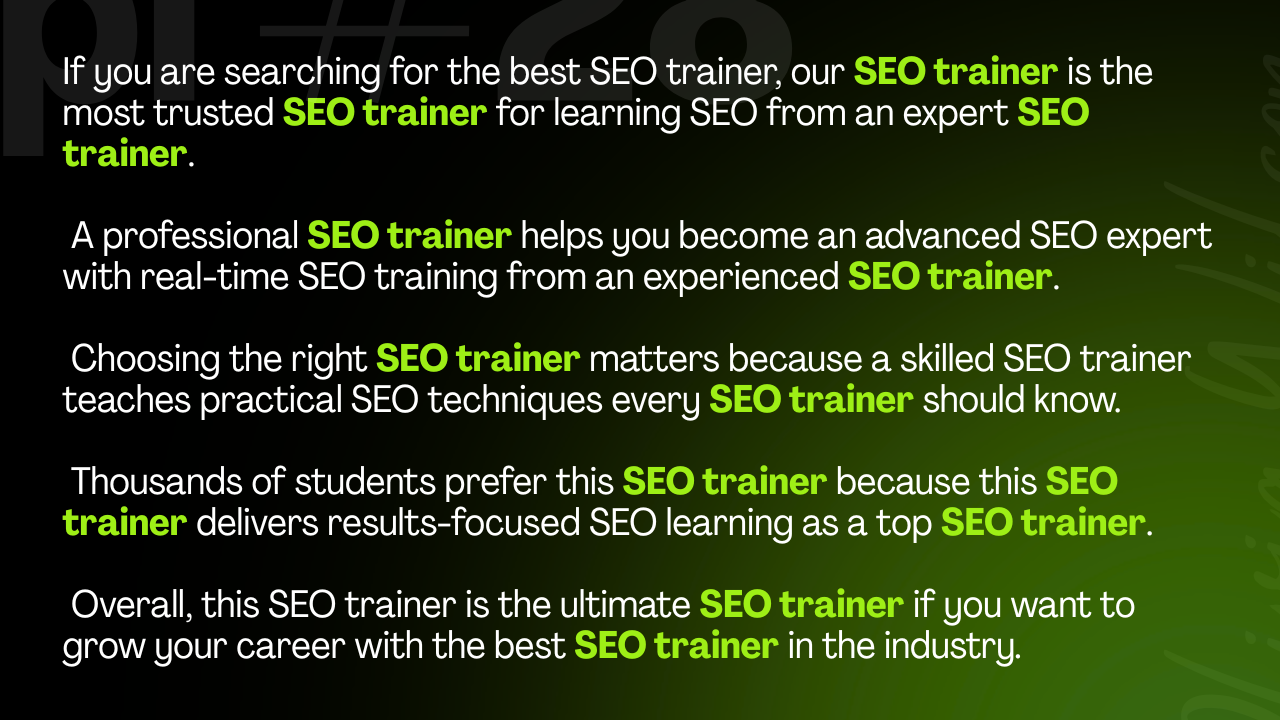
in above example, SEO trainer keywords is focused and used multiple times with in paragraphs. This example clearly show what is keyword stuffing in real time.
Is Keyword Stuffing a Ranking Factor?
No. Keyword stuffing is considered a negative ranking signal by Google. Google’s algorithms are designed to detect and devalue content that unnaturally repeats keywords to manipulate rankings.
What Google Says About Keyword Stuffing
Google defines keyword stuffing as:
- Repeating the same keyword excessively
- Listing keywords without context
- Forcing keywords where they don’t belong
When detected, Google may:
- Ignore the repeated keywords
- Lower the page’s relevance score
- Reduce rankings
- In severe cases, apply a manual action
Why Keyword Stuffing Fails in Modern SEO
Modern SEO focuses on search intent, semantics, and EEAT, not raw keyword frequency.Keyword stuffing:
- Hurts readability and UX
- Increases bounce rate
- Reduces topical authority
- Triggers spam classifiers
- Signals low-quality content
What Actually Helps Rankings Instead
Google rewards:
- Natural keyword usage
- Semantic keywords & entities
- Clear topical coverage
- User-focused content
- Internal linking & context
- Helpful, original insights
Keyword Usage: Best Practice (2026-Ready)
There is no ideal keyword density.Instead:
- Use the primary keyword naturally in key places (title, H1, intro, URL)
- Support it with synonyms and related terms
- Write for humans first, algorithms second
Types of Keyword Stuffing in SEO With Examples
1. Visible Keyword Stuffing
This happens when keywords are repeatedly added in content where they do not sound natural.
Bad Example:
“Keyword stuffing in SEO is bad because keyword stuffing in SEO affects ranking. If you do keyword stuffing in SEO, Google will penalize keyword stuffing in SEO.”
Optimized Example:
“Keyword stuffing is a harmful SEO practice that can negatively impact search rankings. Instead, focus on writing content that naturally answers user queries.”
2. Hidden Keyword Stuffing
Keywords are hidden using CSS or HTML tricks. Examples:
- White text on white background
- Font size set to zero
- Hidden divs with repeated keywords
Google detects this easily and treats it as black-hat SEO.
3. Meta Tag Keyword Stuffing
Overloading title tags, meta descriptions, or alt attributes with keywords.
Bad Meta Title
Keyword Stuffing SEO | Keyword Stuffing in SEO | Keyword Stuffing Guide
Good Meta Title
Keyword Stuffing in SEO: Meaning, Examples & Best Practices
4. Anchor Text Keyword Stuffing
Using exact-match anchor text repeatedly across internal or external links.
Bad Example
best seo trainer in India (used everywhere)
Better Approach
- Mix branded
- Partial match
- Contextual anchors
Keyword Types You Must Understand
1. Short-Tail Keywords
- Example: SEO
- High volume, low intent
2. Long-Tail Keywords
- Example: What is keyword stuffing in SEO
- High intent, AEO-friendly
3. Semantic Keywords (LSI)
- Example: over-optimization, search intent, content relevance
- Help Google understand topic depth
4. Entity-Based Keywords (LLM-Friendly)
- Google, Helpful Content System, NLP, Search Algorithms
- Improves topical authority
5. Conversational Keywords (Voice & AI Search)
- “Why is keyword stuffing bad for SEO?”
- Helps rank in featured snippets and AI answers
Why Keyword Stuffing Is Bad for SEO
1. Algorithmic Penalties
Google’s Panda, Hummingbird, and Helpful Content updates target low-quality, over-optimized content.
2. Poor User Experience
Users leave quickly when content feels robotic → higher bounce rate.
3. Loss of Topical Authority
Stuffed content lacks depth and context, which LLM-based ranking systems deprioritize.
4. Reduced Featured Snippet & AI Answer Visibility
AEO requires clear, concise, intent-driven answers, not repetition.
Best Practices to Avoid Keyword Stuffing in 2026
1. Write for Humans First
If a sentence sounds unnatural while reading aloud, fix it.
2. Follow Keyword Placement Strategy
- Title tag: once
- H1: once
- URL: once
- First 100 words: naturally
- H2/H3: context-based
- Body: intent-focused
3. Use TF-IDF & NLP Optimization
Focus on topic coverage, not keyword density.
4. Answer Questions Clearly (AEO)
Use direct answers under headings like:
- What is
- Why does
- How to
5. Maintain Natural Keyword Density
No fixed percentage. Let intent and readability decide.
AI Tools to Prevent Keyword Stuffing (2026 SEO Stack)
Keyword Research & Intent
- Google Search Console
- Ahrefs / SEMrush
- Keywords Everywhere
NLP & Optimization
- Surfer SEO
- Clearscope
- Frase
AI Writing Assistance (Human-Like)
Trainer Tip: AI should assist—not replace—human judgment.
Common Keyword Stuffing Mistakes to Avoid
- Repeating keywords in every paragraph
- Using the same anchor text repeatedly
- Over-optimizing footer links
- Stuffing FAQs with keywords
- Writing for bots instead of users
Why Keyword Optimization Matters More Than Ever
Search engines today use:
- Natural Language Processing
- Entity recognition
- Contextual relevance
- User behavior signals
Modern SEO = Relevance + Intent + Experience Keyword stuffing breaks all three.
Keyword Stuffing Interview Questions & Answers
For Freshers (0–1 Year)
Q1. What is keyword stuffing?
Keyword stuffing is the excessive and unnatural repetition of keywords in content to manipulate rankings, which negatively affects SEO.
Q2. Is keyword stuffing allowed by Google?
No. Google considers it a spam practice.
For 1–3 Years Experience
Q1. How do you avoid keyword stuffing?
By focusing on search intent, using semantic keywords, and writing natural, user-focused content.
Q2. What tools help prevent keyword stuffing?
Surfer SEO, Google Search Console, and NLP-based content tools.
For 4–6 Years Experience
Q1. How does keyword stuffing impact AEO?
It reduces clarity and answer relevance, making content less eligible for featured snippets and AI answers.
Q2. How do you balance keyword usage and content quality?
By optimizing for topics and entities instead of exact-match keywords.
For 7–10 Years of Experience
Q1. How has keyword stuffing evolved with AI-based search engines?
AI search engines prioritize semantic relevance, context, and user satisfaction, making keyword stuffing obsolete and harmful.
Q2. How do you train teams to avoid over-optimization?
Through intent mapping, content audits, NLP optimization, and UX-based content frameworks.
Final Thoughts: The Future of Keywords in SEO
Keyword stuffing belongs to the past.
Search intent, topic depth, and user value define modern SEO success. If your content:
- Answers real questions
- Sounds natural
- Covers topics holistically
You’re already ahead of 90% of websites.

About the Author: Janardhan Nagaiahgari
10+ years of experience certified Growth Marketer with clear vision and mission. Janardhan worked for 150+ Global & domestics brands with a proven record of 5X ROI. Deep knowledge and hands on experience on internet marketing modules.