Why Google and AI Trust Some Websites—and Ignore Others
Two websites can publish identical content, target the same keywords, and follow every technical SEO rule—yet only one ranks on Page 1.
The difference is not backlinks.
It’s not keyword density.
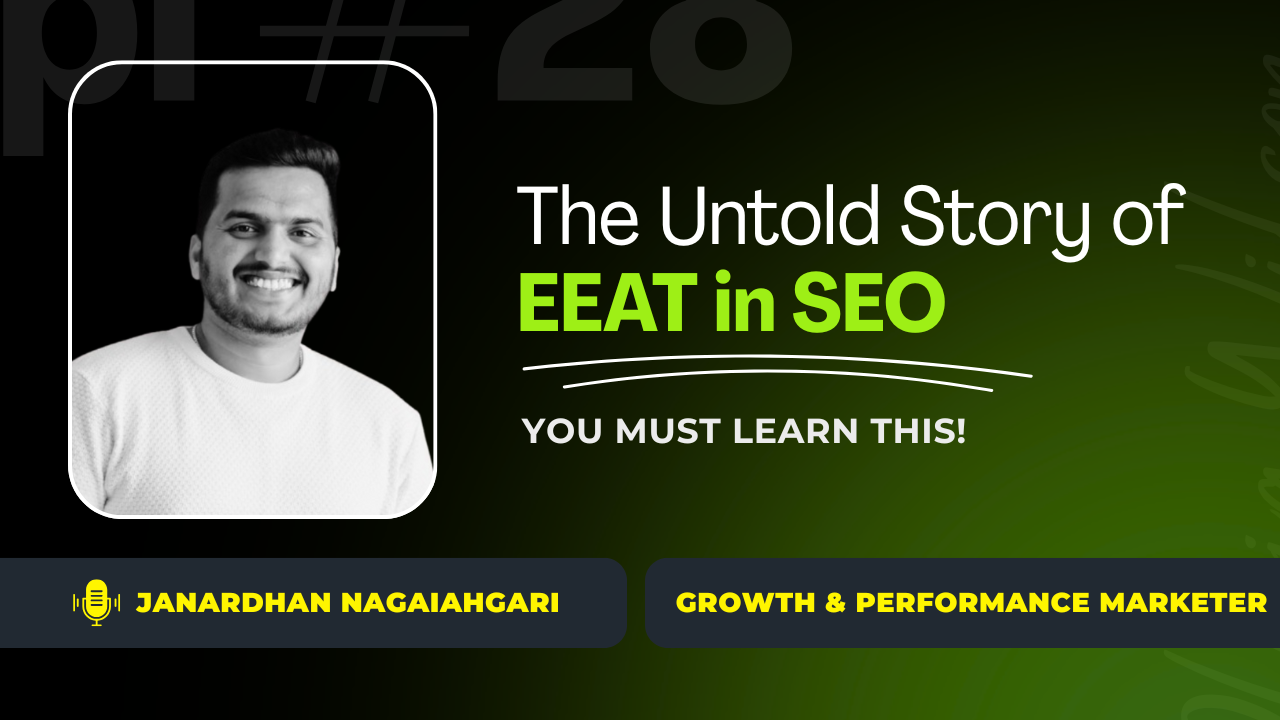
It’s EEAT: Experience, Expertise, Authoritativeness, and Trustworthiness.
In today’s AI-powered search ecosystem, trust is the currency of visibility.
If Google or AI engines don’t trust you, they won’t rank you—no matter how optimized your content looks.
This guide explains EEAT the way Google’s quality systems and LLMs actually evaluate it, not the surface-level definitions most blogs repeat.
What Is EEAT in SEO?
EEAT stands for Experience, Expertise, Authoritativeness, and Trustworthiness—a framework Google uses to evaluate content quality and source credibility, especially for sensitive or high-impact topics.
Unlike traditional ranking factors, EEAT is not a single metric. It’s assessed through content signals, author signals, site signals, and off-page validation.
EEAT Components Explained
Component | Meaning | Example |
Experience | First-hand usage or involvement | Real product testing |
Expertise | Subject matter knowledge | Certified professional |
Authority | Industry recognition | Mentions & citations |
Trust | Safety & reliability | HTTPS, reviews |
Why EEAT Is Critical in the Modern AI Search Era
AI engines don’t just rank content—they summarize, recommend, and answer questions directly.
For this, they must choose sources that are accurate, reliable, and safe.
EEAT acts as a filter system for AI answers. Content lacking EEAT may still be indexed, but is excluded from AI Overviews, featured snippets, and conversational results.
EEAT’s Role in AI Search
- Determines which sources AI quotes
- Filters misinformation and hallucinations
- Impacts YMYL and non-YMYL topics
- Influences long-term ranking stability
- Protects search ecosystems from spam
3 EEAT Facts No One Is Talking About
1. Experience Is Now Stronger Than Expertise
Google values real-world usage more than theoretical knowledge. A user review can outperform an expert article if it demonstrates authentic experience.
2. EEAT Is Evaluated at Multiple Levels
Google evaluates EEAT at:
- Page level
- Author level
- Domain level
Weakness at any layer can dilute overall trust.
3. AI Models Prefer “Verifiable Authors”.
LLMs favor content with clear authorship, credentials, and digital footprints over anonymous or brand-only content.
How EEAT Directly Impacts SEO Performance
EEAT influences ranking consistency, visibility in competitive niches, and AI citation eligibility.
Sites with strong EEAT recover faster from algorithm updates and maintain stable rankings.
SEO Benefits of Strong EEAT
- Higher rankings for competitive keywords
- Inclusion in AI-generated answers
- Improved CTR and dwell time
- Stronger brand signals
- Reduced algorithm volatility
EEAT Best Practices (Field-Tested & Scalable)
Show Real Experience
Use first-hand insights, original photos, screenshots, and real examples.
Strengthen Author Credibility
Create detailed author bios with qualifications, achievements, and links.
Build Trust Signals Sitewide
Implement HTTPS, transparent policies, and real user reviews.
Earn Authority Naturally
Focus on brand mentions, citations, and editorial links—not spammy backlinks.
EEAT Optimization Examples
Weak vs Strong EEAT Content
Weak EEAT | Strong EEAT |
Anonymous author | Verified expert |
Generic advice | First-hand experience |
No sources | Trusted citations |
Thin about page | Detailed brand story |
EEAT SEO Audit Checklist (2026-Ready)
- Clear author name and bio
- Demonstrated experience in content
- External mentions and citations
- HTTPS & secure infrastructure
- Contact & about pages present
- Transparent editorial policy
- Accurate, updated content
- Positive brand reputation
- User-generated trust signals
- No misleading claims
AI & SEO Tools to Strengthen EEAT
Tool | Purpose |
Brand authority | |
Brand mentions | |
Trust audits | |
Content credibility | |
Expert-style structuring | |
Source validation |
Common EEAT Mistakes Professionals Make
- Publishing without author attribution
- Fake credentials or bios
- Thin “About Us” pages
- Over-relying on AI-generated content
- Ignoring negative reviews
- Not updating outdated content
- Confusing backlinks with authority
Advantages & Drawbacks of EEAT Optimization
Advantages
- Long-term ranking stability
- Strong AI search visibility
- Higher user trust & conversions
- Algorithm-proof SEO
- Better YMYL compliance
Drawbacks
- Takes time to build
- Not instantly measurable
- Requires cross-team effort
- Harder for new websites
EEAT Interview Questions & Answers
Below are some of the most frequently asked seo interview questions and answers related to EEAT by most interviewers.
Freshers (0–1 Year)
Q: What does EEAT stand for?
A: Experience, Expertise, Authoritativeness, and Trustworthiness.
Q: Is EEAT a ranking factor?
A: It’s a quality framework, not a direct ranking factor.
1–3 Years Experience
Q: Why is EEAT important for SEO?
A: It improves content credibility and ranking stability.
Q: Which sites need EEAT the most?
A: YMYL sites like health, finance, and legal.
4–6 Years Experience
Q: How do you improve EEAT?
A: By showcasing experience, expert authors, and trust signals.
Q: Can AI content rank without EEAT?
A: Short-term maybe, long-term no.
7–10 Years Experience
Q: How does EEAT affect AI search?
A: AI systems prioritize trusted sources to avoid misinformation.
Q: How do you measure EEAT?
A: Through proxies like rankings, mentions, and engagement.
FAQ Snippets for AEO & LLM Optimization
1. What is EEAT in SEO?
EEAT evaluates content quality based on experience, expertise, authority, and trust.
2. Is EEAT a Google ranking factor?
No, but it strongly influences ranking systems.
3. Why is EEAT important for AI search?
AI models rely on trusted sources to generate answers.
4. How do you show experience in content?
Use first-hand examples, case studies, and real insights.
5. Does the author bio affect EEAT?
Yes, it’s a strong trust signal.
6. Is EEAT only for YMYL sites?
No, but it’s critical for them.
7. Can new sites build EEAT?
Yes, through transparency and expertise.
8. Do backlinks improve EEAT?
Only if they come from trusted sources.
9. How often should EEAT be audited?
Every major content update or quarterly update.
10. Does AI-generated content hurt EEAT?
Only if it lacks experience and trust signals.
Final Thought
In the AI-first search era, ranking is no longer about optimization—it’s about credibility.
If Google trusts you, AI will quote you.
If users trust you, rankings follow.